

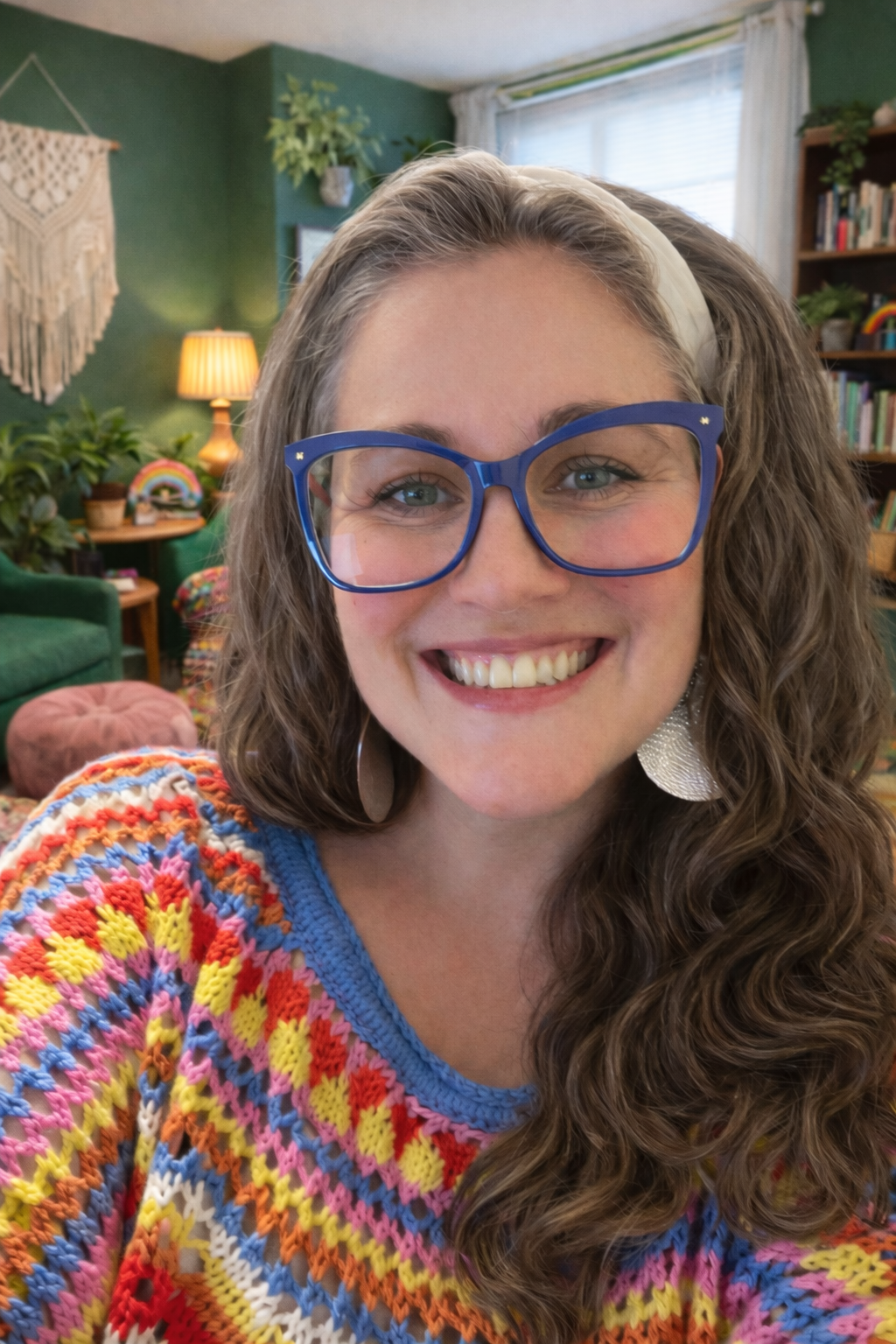
Meet the Founder
Dr. Jessica Riutzel-Schmidt, LCSW
I’m a chronically ill, ADHD mom—parenting beautifully complex children while navigating many of these same patterns within my own family.
I know what it’s like when symptoms don’t fully add up—
for yourself, for your child, or both.
I know what it’s like to:
try to make sense of overlapping symptoms
move through medical systems that don’t always have clear answers
advocate—often persistently, and at times through experiences of dismissal, gaslighting, or medical trauma
And I know how quickly you can go from
“this is probably nothing”
to
“something is definitely happening and I don’t have the right words for it yet.”
That lived experience shapes how I approach this work.
Not by assuming your story is the same as mine,
but by understanding how complex, layered, and often isolating this process can be.
Clinical Background
I’m a licensed clinical social worker based in Oregon, offering virtual therapy for individuals and families across the state.
I hold both a Master’s and a PhD in Social Work, and I’ve been in this field for over 20 years across clinical, research, and systems-level roles.
Over time, my work has included:
working as research faculty
leading programs and advocacy efforts at a macro level
providing school-based therapy with children and youth
working as a caseworker with children and families
serving as a foster parent
coaching youth with disabilities as they transition out of the foster care system
I’ve worked closely with youth in the foster care system and have spent much of my career supporting those impacted by trauma.
My clinical work now focuses on the intersection of anxiety, chronic symptoms, neurodivergence, and nervous system patterns—especially when things don’t fit neatly into one explanation.
How I Work
In my work, I bring both:
clinical training and experience
and a grounded understanding of what this actually looks like in real life
I tend to be:
curious (sometimes very)
pattern-oriented
and more interested in how things connect than forcing them into one box
Which means we’re not just looking at symptoms in isolation—
we’re looking at how things interact.
Because when you start to see the pattern,
things often feel a little less confusing (and a little less overwhelming).
A Bit of a Personal Note
You might also find me on a Friday night reading medical journals, listening to podcasts, or watching a webinar—because my special interests genuinely are understanding how the brain works and how neurodivergence and chronic illness intersect.
I’m drawn to the “why” behind things—how patterns form, how systems interact, and how understanding those connections can make life feel a little more manageable.
And while that might sound a little intense, it’s also what allows me to translate complex information into something that’s actually useful in real life—for myself, and for the people I work with.
Why This Work Matters to Me
Early on, I found myself asking different questions than the ones I was being given.
Not because I dismissed anxiety—
but because it didn’t fully explain what I was seeing.
And once you notice that something doesn’t quite add up,
it’s hard to unsee it.
(And if you have an ADHD brain, it’s nearly impossible to unsee it- thank you pattern recognition!)
That perspective continues to guide my work now.
With curiosity.
With nuance.
And with the understanding that when something doesn’t fully add up, there’s often more to explore.
If You’re Here
If you’re here, there’s a good chance you’ve been trying to make sense of something that doesn’t fit neatly into one box.
You don’t have to figure it all out at once.
You don’t have to have the right language yet.
You can start by getting a little more curious
about what your body—or your child’s body—might actually be responding to.
We're not here to follow trends—we're here to build something timeless. With a blend of creativity, strategy, and heart, we help ideas come to life.